Thanks That Don’t Clutter: Small Gifts for Teachers, Carers and Neighbours

Photo: California National Guard, CC BY 2.0, via Wikimedia Commons
There is a particular kind of November panic that sets in when you realise you want to say thank you properly — to the teacher who has been brilliant all year, the carer who always checks in, the childminder who somehow gets your child to eat vegetables, or the neighbour who took in yet another delivery. You want to mark it. You do not want to hand over a mug that will live in a cupboard until 2031.
The good news is that the £10–£20 zone is genuinely lovely for thank-you gifts. It is enough to buy something thoughtfully nice, but not so much that it feels awkward. The trick is to choose something that gets used, eaten, read or enjoyed — and then pair it with a note that proves you were paying attention.
Why small is often better
A thank-you gift is not a performance. It is a small, warm signal. Teachers and carers are often on the receiving end of well-meant but slightly random presents: scented candles they cannot burn, ornaments with no home, and enough novelty biscuits to open a small shop. A £15 gift that disappears usefully — tea, hand cream, a good book, a plant — is far more thoughtful than a £40 object that needs dusting.
At Gifts in Mind, we are firmly on the side of the useful, the consumable and the genuinely personal. If you can imagine the recipient using it in the next fortnight, you are on the right track.
Five small gifts that earn their place
1. A proper tea or coffee kit. Not a giant hamper — just a nice box of loose-leaf tea or ground coffee, plus a small pack of good biscuits from a local deli. It feels generous without being heavy, and it is easy to share with a staff room or a household. For a neighbour, add a note saying you owe them a cuppa.
2. Hand cream or soap from a small UK maker. Choose something with a gentle scent and nice packaging. Avoid the giant bath sets; a single lovely hand cream is more likely to be used. It works for carers especially, who wash their hands approximately four hundred times a day.
3. A potted herb or a small plant. Rosemary, thyme or a little peace lily can sit on a windowsill without demanding a garden. For teachers, a tiny succulent in a plain pot is cheerful; for a neighbour, a pot of bulbs ready to bloom is a quiet bit of spring.
4. A bookshop voucher or a magazine subscription. A £15 voucher for a local independent bookshop is a gift of choice. If you know their taste, choose a paperback instead. For childminders, a year of a nice children’s magazine can be a lovely shared gift — though check it is for them, not just the children.
5. A small experience. A cinema ticket, a museum café voucher, or a contribution towards a local afternoon tea can feel much more personal than another object. Keep it simple and local: a nearby independent cinema, a National Trust café, or a favourite deli. It says “take a break” rather than “here is another thing”.
The note is the actual gift
A handwritten note costs almost nothing and does most of the emotional work. Be specific. “Thank you for helping me understand the maths homework without making me feel like an idiot” is better than “Thanks for everything”. “Thank you for always checking in on Mum — it means I can relax at work” is better than “Thanks for your care”.
If you are buying for a teacher at the end of the school year, a card signed by your child is worth more than a fancier gift. If it is a December thank-you for a carer, mention one concrete thing they did. Specific gratitude is the opposite of clutter.
How to avoid the clutter trap
Ask yourself three questions before you buy. Will they use it? Will it take up space? Would they feel obliged to keep it forever? If the answer to the last two is yes, choose something consumable or experience-based instead.
Avoid anything that needs batteries, instructions or a shelf. Avoid novelty mugs unless you know they collect them. Avoid giant candles and ornamental plaques. And avoid the temptation to buy a “set” of things just because it looks fuller. One lovely item plus a note beats a basket of maybes.
Presentation matters, but keep it low-key
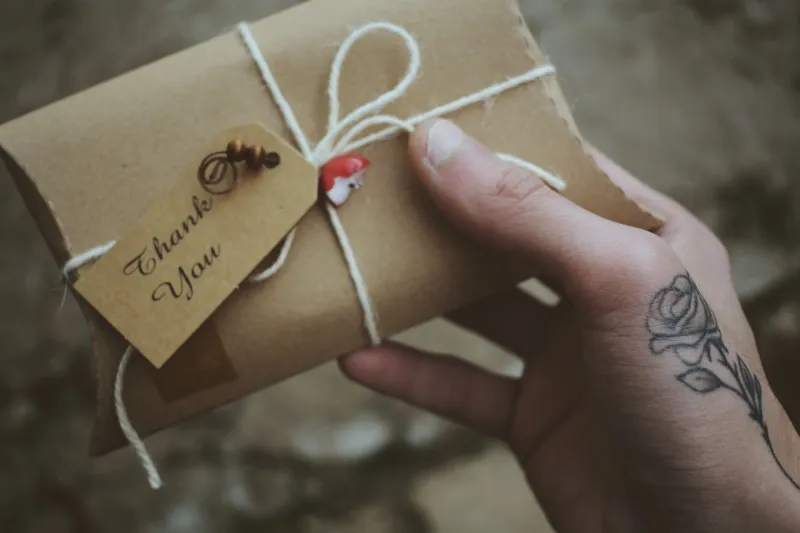
Brown paper, a bit of twine and a decent card is plenty. If the gift is for a teacher, your child can draw on the tag. If it is for a neighbour, pop it through the door with a note rather than making a big doorstep ceremony. If it is for a carer, check whether gifts are allowed at their workplace before you turn up with a hamper.
A simple formula
Choose one useful or delicious thing in the £10–£20 range. Add a card with a specific memory or thank-you. Keep the wrapping simple. Hand it over at a sensible moment. That is it. No performance, no clutter, no obligation.
Saying thank you should feel good for both of you. A small, well-chosen gift and a few honest sentences will do more than a grand gesture that has to be dusted. That is the whole point of a thoughtful thank-you — it lands, it is appreciated, and it does not become a job for the recipient.