Buy Less, Choose Better: The Case for One Brilliant Birthday Gift

Photo: NASA images by Reto Stöckli, based on data from NASA and NOAA. Instrument: Terra - MODIS, Public domain, via Wikimedia Commons
Birthday shopping in the UK has a habit of going sideways. You set out with a sensible budget, then find yourself in a shop buying a candle, a box of chocolates and a novelty mug because each one feels too small on its own. By the time you get to the till, you have spent £45 on three things that will be politely thanked for and quietly forgotten by February. The 'one better thing' rule is a reaction to that. It says: instead of spreading your budget across several safe presents, put the same money into one gift with real staying power.
This is not about being flashy. It is about being deliberate. In 2026, when many of us are trying to cut down on clutter and buy fewer, better things, a single thoughtful birthday present can feel more generous than a bag of assorted maybes.
The five-safe-things problem
Safe presents are not bad presents. A nice candle, a decent bottle of wine and a box of biscuits will never offend anyone. The problem is that they are interchangeable. They do not say much about the person receiving them. They also add to the background noise of a home: another mug, another hand cream, another thing to find a place for.
Spreading a budget across five small items often comes from a place of anxiety. We worry that one present will look mean, or that we have not got the person's taste right. So we hedge. But hedging usually produces a birthday haul that feels like a duty shop rather than a proper gift. One better thing removes the guesswork from the recipient's side: there is one clear, thoughtful choice to open.
What 'one better thing' actually means
The rule is simple: decide on a realistic budget, then spend most or all of it on one present that is noticeably better than what you would normally buy. 'Better' does not mean expensive. It means better made, better suited, better timed or better remembered. A £20 pair of wool socks from a proper maker is a better thing than five £4 pairs from a supermarket. A £30 cookbook by a chef they love is a better thing than a £30 bundle of kitchen gadgets they will never use.
The test is not price. It is whether the gift has a reason to exist in that person's life. If you can finish the sentence 'I got you this because...' without sounding vague, you are on the right track.
A simple decision framework
When you are stuck, work through these five questions in order.
- What do they use every day and quietly complain about? A leaking water bottle, a blunt kitchen knife, a phone case held together with tape. Replacing something worn out is one of the most thoughtful things you can do.
- What would they buy for themselves if they were being a bit indulgent? Nice olive oil, a proper umbrella, a merino base layer, a good notebook. The gift works because it is an upgrade they would not quite justify.
- What do they love but never upgrade? Coffee, tea, skincare, stationery, gardening tools. A better version of an everyday pleasure is almost always welcome.
- Would they rather do something than own something? If so, an experience may be the better thing. A pottery workshop, a ticket to a gig, a meal at the local restaurant they keep meaning to try.
- Will it still be around — or still be remembered — in six months? If the answer is no, it might be a safe present rather than a good one.
Examples by budget
Under £25: a really good bar of chocolate from a local maker, a proper thermos mug, a pair of wool-blend socks, a houseplant in a nice pot, a paperback they have been meaning to read, or a nice notebook with a handwritten note inside. Spend the whole £25 on one of these rather than splitting it three ways.
£25–£50: a decent chef's knife, a British-made wool throw, a coffee subscription for three months, a ticket to a local exhibition, a good umbrella, or a cookbook by someone they admire. This is the sweet spot for the one better thing rule: enough to buy quality, not so much that it feels awkward.
£50–£100: a pair of proper walking boots if they are outdoorsy, a really good desk lamp, a spa treatment, a restaurant voucher, a piece of jewellery from a small maker, or a workshop in something they love. At this level, the gift should feel like a decision rather than a default.
£100+: a piece of furniture they have admired, a short break, a signed book, a beautiful piece of pottery, or a contribution towards something bigger they are saving for. If you are spending this much, make sure it is something they have explicitly wanted or that clearly fits their life.
Matching the gift to the person
For the homebody: a weighted blanket, a really good hot chocolate set, a cosy throw, a book and a promise of a quiet night in.
For the foodie: a proper olive oil, a pasta maker, a cookbook, a cheese subscription or a voucher for a local cookery class.
For the outdoorsy type: wool socks, a thermos, a head torch, a National Trust membership or a decent waterproof.
For the culture lover: a theatre ticket, a gallery membership, a beautifully produced art book or a subscription to a literary magazine.
For the practical person: a good tool, a sturdy bag, a label maker, a quality pen or an upgrade to something they use daily. Practical does not have to mean boring; it just has to be useful.
When an experience is the better choice
Experiences are often the most thoughtful option for people who already have enough stuff. They also suit people whose homes are small, who are trying to declutter, or who value time together more than objects. The trick is to make the experience specific and easy to say yes to. 'A day out' is vague. 'Two tickets to the exhibition on 14 March, and I will drive' is a gift.
If you are buying an experience, check the practical details: dates, location, accessibility, whether the person can actually use it. A voucher for something they will never book is not thoughtful; it is admin with a bow on it.
When an everyday upgrade is the better choice
Sometimes the most thoughtful gift is the least glamorous one. A new kettle for someone whose old one takes four minutes to boil. A proper umbrella for the person who walks to the station every day. A good pillow for someone who never sleeps well. These gifts say: I pay attention to your actual life. That is often more powerful than a surprise.
The wrap and the note
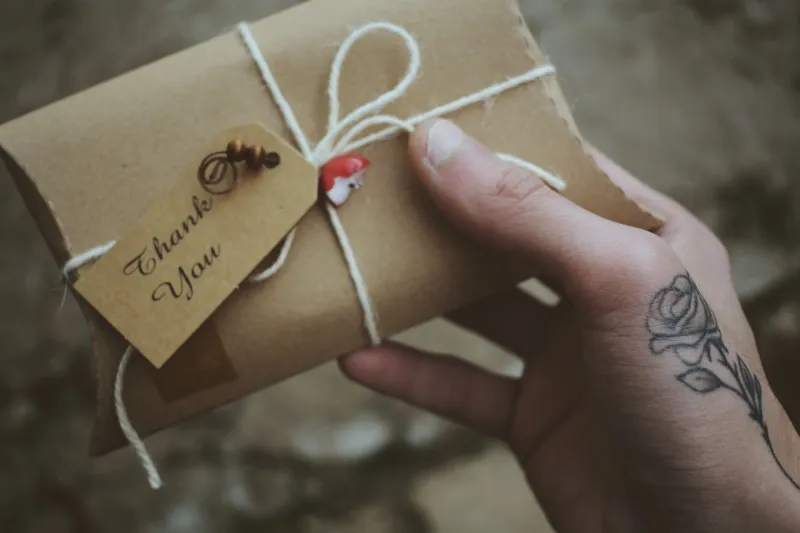
A single present needs good presentation. Use nice paper, a proper ribbon and a card that explains your thinking. The note does not have to be long. 'I noticed your old one was on its last legs' or 'I thought you would love this' is enough. The note is what turns a present into a message.
The bottom line
The one better thing rule is not a demand to spend more. It is an invitation to spend with more focus. Choose one present, choose it properly, and let it do its job. In a world of infinite safe options, the gift that says 'I thought about you' will always beat the bag of things that says 'I panicked in town'. This birthday, buy less and choose better.